Little Feelings
A preschool emotional intelligence app — helping young children name, explore, and navigate big feelings, with beautiful illustrated cards and gentle AI-powered guidance.
// the problem
Young children have enormous emotions and almost no vocabulary for them. "I'm sad" is the ceiling for most three-year-olds — but the feelings underneath that word are vastly different from each other, and the responses that help are different too. Parents and early childhood educators want to support children through hard emotions, but in the moment — when a child is melting down or shutting down — it's hard to know what to say or do. Most available tools are either clinical (designed for therapists) or superficial (feelings flashcards with no guidance on what to do with them).
// why this matters
Emotional intelligence developed early has lifelong impact on relationships, resilience, and mental health. The research is clear. The tools haven't caught up. Little Feelings is built for the gap: something a parent can reach for during a hard moment, and something an early childhood educator can use as a natural part of the classroom day.
// how it works
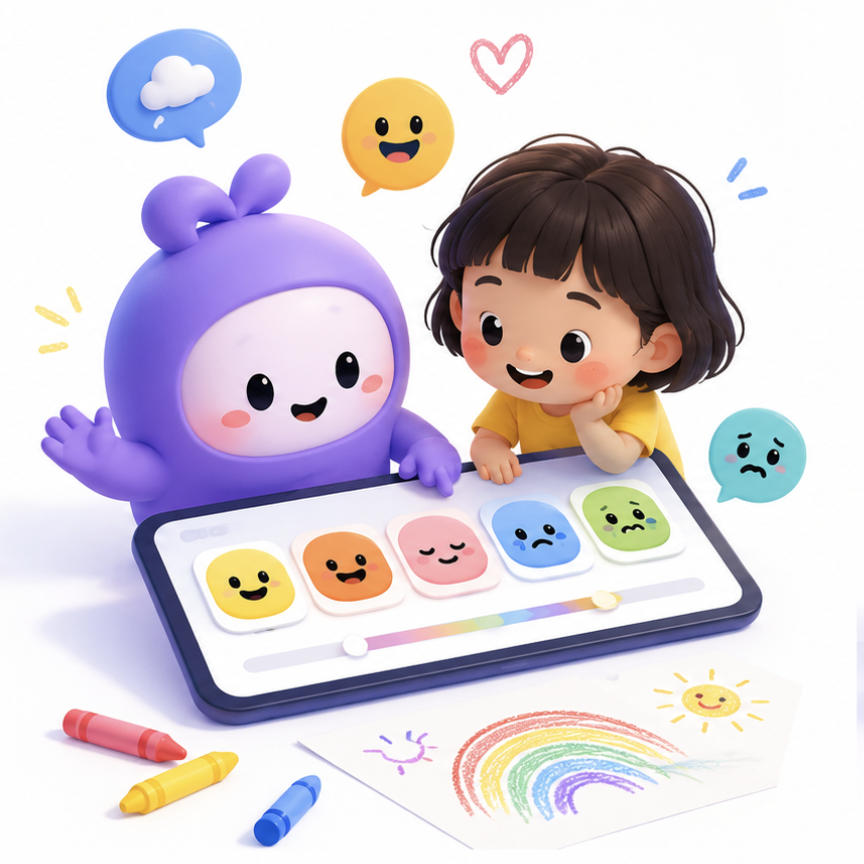
A card-based interface where each card represents a feeling — illustrated consistently and beautifully using AI image generation — with age-appropriate language, a simple explanation of what that feeling is like in the body, a few things that might help, and a prompt for the adult to use with the child. The AI generates the cards; the human facilitates the conversation.
The illustrations use ChatGPT image generation, which produces consistent character styling across the full card library — a significant practical advantage over commissioning illustration, and important for the child's experience of the app as a coherent world.
// trade-offs i made
The adult is always the facilitator, never the child alone. Every card is designed to be read by a parent or educator with the child, not handed to a child to navigate independently. This is both a pedagogical and a safety decision: emotional conversations with young children need an adult present. The app is a tool for the adult to use well, not a self-service resource for the child.
No open-ended AI generation in the child-facing layer. All card content is reviewed and curated before it goes into the app. The AI accelerates production; a human reviews every output before a child sees it.
// trust & safety
All content reviewed against age-appropriate emotional development frameworks before inclusion. No open-ended generation in the child-facing experience. The adult facilitation model means a trusted human is always present in the emotional conversation — the app never positions itself as a substitute for that relationship. Escalation guidance included for situations that may require professional support (persistent anxiety, signs of trauma response).
// what's next
A structured curriculum of feelings to introduce week by week, so educators can use Little Feelings as a programme rather than an ad hoc resource. A "how did it go?" log for parents to track which feelings their child has explored and what helped. And a teacher dashboard for early childhood settings using it across a whole class.